
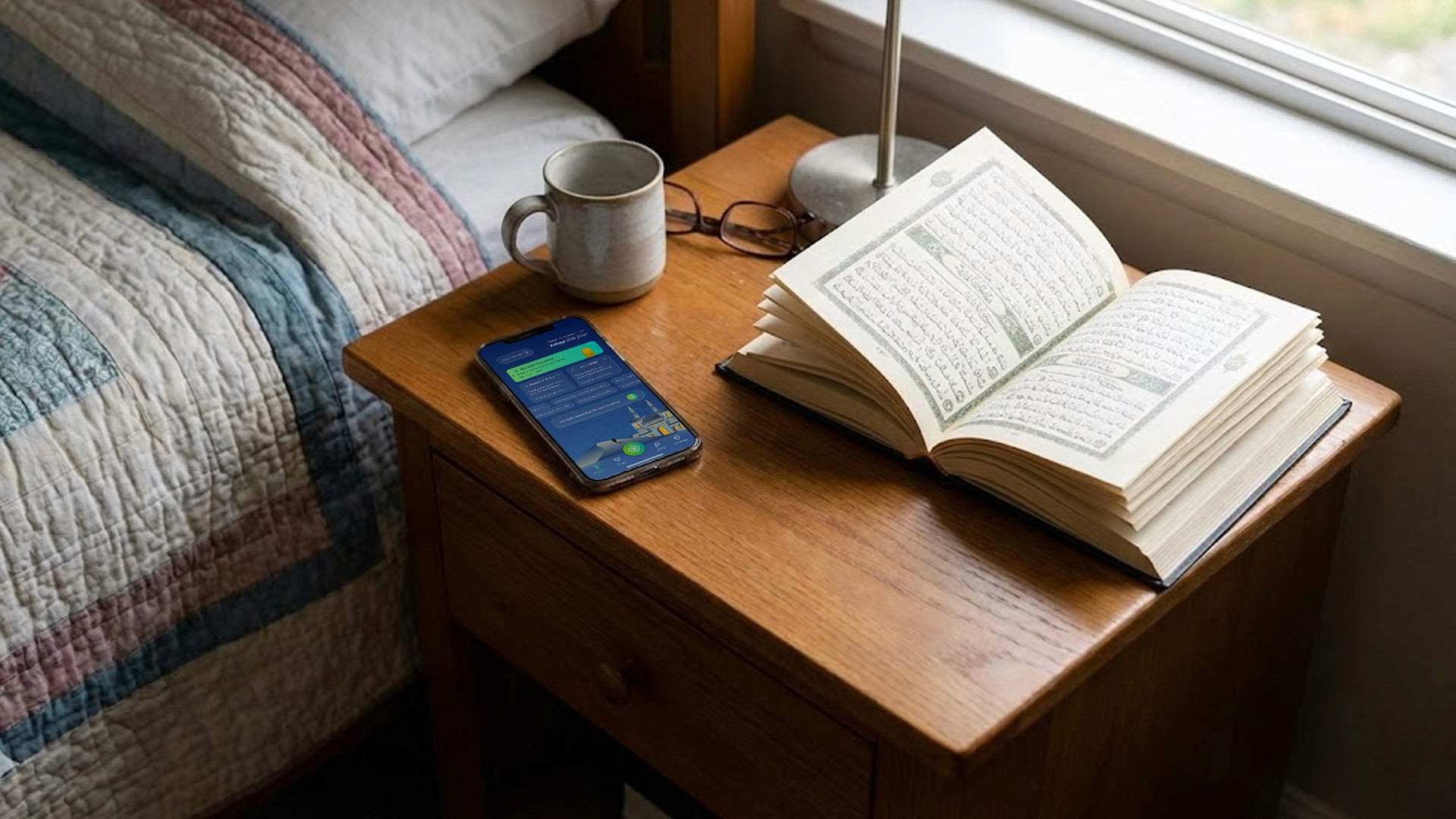
From Morning Adhkar to Nightly Reflection: A Digital Routine for the Modern Muslim
Our smartphones are usually the biggest barrier to our Khushu (focus). We pick them up to check the time and end up scrolling for twenty minutes. But what if we flipped the script? What if your phone became your most powerful ally in staying consistent with your Deen?
At eQRA AI, we believe technology shouldn't pull you away from Allah, it should help you return to Him. Here is how you can build a high-performance, digital-first routine that brings Barakah back into your 24 hours.
Phase 1: The Barakah Filled Morning (Fajr – 9:00 AM)
The Prophet ﷺ said, "O Allah, bless my Ummah in its early hours." The way you start your morning dictates the energy of your entire day.
1. The Digital Fajr Wakeup
Instead of a jarring alarm that makes you hit snooze, use a dedicated prayer app. Set a "Pre-Adhan" reminder 10 minutes before Fajr to give yourself time to wake up, perform Wudhu, and pray with presence.
Use the Salah Log immediately after you finish. Checking that box first thing in the morning creates a psychological win that motivates you for the rest of the day.
2. Guarding Your Morning Adhkar
Before you check your work on Slack or Instagram, open your Morning Adhkar. These supplications are your spiritual armor for the day. Spend just 5–7 minutes on the core Adhkar. If you’re unsure of the meanings, use our Islamic chatbot, Safir, to quickly look up the significance of specific morning supplications.
Phase 2: The Deep Work Sprint (9:00 AM – Dhuhr)
In a modern routine, we often separate "work" from "worship." But for a Muslim, work is worship if the intention is right.
3. Anchoring Your Schedule Around Salah
Instead of trying to "fit prayer in" between meetings, use your prayer times as the anchors of your day. Use the Dhuhr prayer as a hard reset. Step away from your desk, put your phone on "Do Not Disturb," and reconnect. This isn't just a religious duty; it’s a mental health necessity that prevents midday burnout.
Phase 3: The Midday Mindfulness (Asr – Maghrib)
This is the "danger zone" where productivity usually dips.
4. The Digital Tasbeeh Break
If you’re waiting in line, sitting in traffic, or transitioning between tasks, instead of listening to music, use the Tasbeeh Counter in eQRA. Set a goal for 100 Istighfar (seeking forgiveness) during your afternoon commute. The haptic feedback on the digital counter allows you to keep your tongue busy with Dhikr without having to constantly look at your screen.
Phase 4: The Evening Wind-Down (Maghrib – Isha)
As the sun sets, the focus shifts from "doing" to "being."
5. Situational Duas for Stress Relief
Workdays can be heavy. Whether it was a tough meeting or general exhaustion, don't carry that stress into your family time. Try asking Safir, our AI assistant, for a Situational Dua for peace of mind. Getting a tailored recommendation based on how you’re feeling helps you process the day’s emotions through a spiritual lens.
Phase 5: The Nightly Muhasabah (Before Sleep)
Muhasabah (self-reflection) is the secret of the most successful Muslims in history.
6. Reviewing Your Digital Deen Dashboard
Before you close your eyes, take one minute to look at your eQRA dashboard.
Did you hit all 5 prayers?
Did you complete your Adhkar?
Once you're done with both your prayers and Adhkar, set a clear niyyah (intention) for the next day.
Digital vs. Manual: Why Technology Wins for Consistency
Feature | Manual Routine | Digital Routine (eQRA) |
Reminders | Dependent on Memory | Automated & Location-Aware |
Accuracy | Prone to guesswork unless you talk to a scholae | Verified Scholarly Data |
Motivation | Easy to lose track | Visual Progress |
Knowledge | Requires Books/Searching | Instant AI Guidance (Safir) |
How to Optimize Your Life Today
Download eQRA AI and set up your location for precise prayer times.
Start using the Salah Log for every single prayer. Don't worry if you miss one; you can always log it later once you’ve made up the missed prayer.
Set a reminder for the specific "Morning and Evening" windows.
When you have a question about a Sunnah habit or a Fiqh ruling, use the Islamic chatbot feature to get instant, scholarly-backed answers.
Frequently Asked Questions
1. Can an app really help me with my Khushu?
While the app can't pray for you, it removes the "friction" of worship. By handling the reminders, tracking, and knowledge-seeking, it clears the mental clutter so you can focus entirely on your connection with Allah.
2. What makes Safir different from other AI tools?
Most AI tools pull data from the entire internet, which can lead to mistakes in religious rulings. Safir is an Islamic chatbot trained specifically on verified Fatawa and classical texts, ensuring your guidance is safe and authentic.
3. Is it okay to use a digital Tasbeeh counter?
Yes! Scholars have noted that any tool that helps you remember Allah more often is a blessing. The digital counter is simply a modern version of the traditional prayer beads.
4. How do I stay consistent when I'm busy?
The key is Anchoring. Don't build a routine and then add prayers; build your prayers and then add your routine. eQRA makes this shift easy by showing your day through the lens of Salah times.